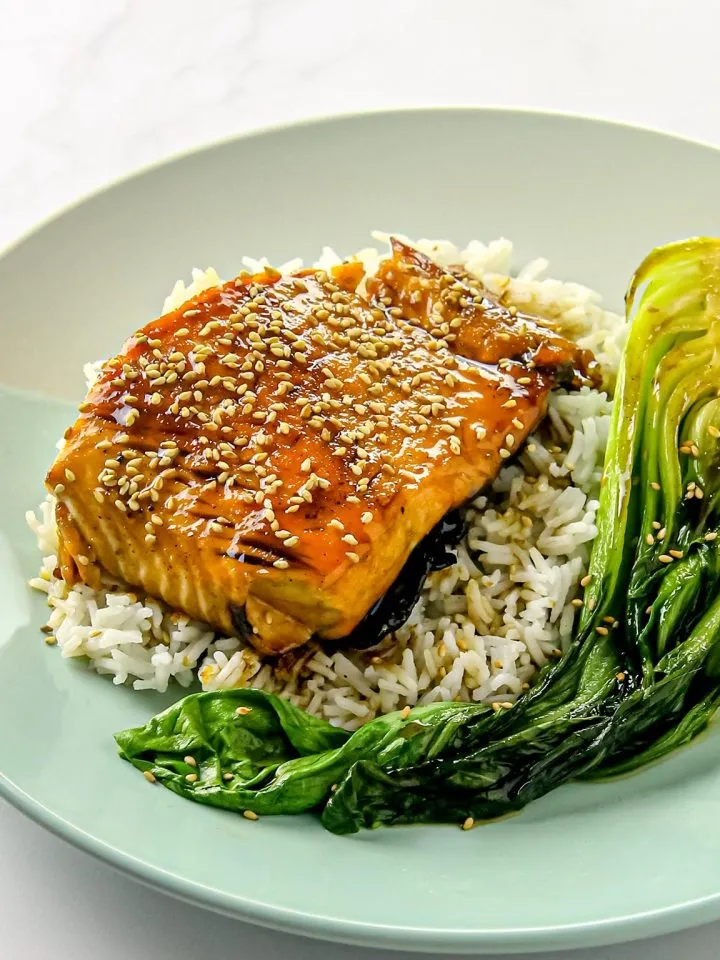
This dish is a smart weeknight dinner because the salmon, rice, and bok choy all pull their weight without making the cook feel complicated. The honey-soy-sesame sauce gives you sweet, salty, and nutty flavor in one move, and cooking the salmon and bok choy in the same skillet keeps the meal low-drama and easy to clean up. The salmon stays tender, the bok choy turns soft with lightly browned edges, and the sauce reduces into a glossy finish that ties everything together.
What to expect from the flavor
This is a balanced, savory-sweet plate rather than a heavy one. The soy sauce brings salt and depth, honey adds a sticky glaze, and toasted sesame oil gives the sauce a warm, nutty finish. Baby bok choy is a great match here because it stays fresh and mild, so it does not compete with the salmon. Served over basmati rice, the whole dish feels light but still satisfying.
Why the pan method works so well
Cooking the salmon first gives it a chance to pick up color before the sauce thickens. Then the bok choy goes into the same skillet, which lets it soak up some of the savory pan juices. That last step where the sauce reduces is important: it concentrates the flavor and helps the final drizzle cling to the fish and rice instead of pooling on the plate.
If the salmon seems to stick at first, give it another moment before turning it. Once it has enough color, it usually releases more easily. That is a simple cue that helps newer cooks feel more confident at the stove.
Easy swaps that still make sense
- Rice: Basmati rice keeps the meal light and fluffy, but jasmine rice or another long-grain rice will also work well.
- Greens: Baby bok choy is ideal, but if you cannot find it, try halved smaller heads of bok choy or another sturdy green that can stand up to a quick pan cook.
- Sauce: The note about doubling the sauce is worth using if you like extra for rice. That is especially helpful if you want the bowl to feel more saucy and less restrained.
- Protein: The same flavor profile would also work with another firm fish, but salmon is the best fit here because it holds together well in the skillet and pairs naturally with sesame and soy.
Simple tips for better salmon
- Pat the salmon dry before seasoning if you want better browning.
- Keep the heat at medium so the honey in the sauce does not scorch.
- Watch the fish closely during the last few minutes; salmon goes from tender to dry quickly.
- Use the visual cue in the recipe: the salmon is ready when it flakes easily and looks opaque all the way through.
What to serve with it
The recipe already covers the main meal with rice, salmon, and vegetables, so you do not need much else. If you want to round it out, keep the sides simple and fresh. A cucumber salad, steamed edamame, or a crisp green salad would all fit the same flavor lane without making dinner feel heavier. This is also a good recipe for a smaller household because it plates well without a lot of extra pieces.
Storage and leftovers
Leftover salmon and bok choy can be stored in an airtight container in the refrigerator and reheated gently. For the best texture, warm it just until heated through so the salmon stays moist. Rice is easiest to reheat with a splash of water to loosen it up. If you know you want leftovers, consider saving a little extra sauce to freshen the bowl when serving again.
Final thought
If you want a salmon dinner that feels flavorful, doable, and not fussy, this one delivers. It uses grocery-store ingredients, comes together in one skillet, and gives you a polished-looking plate without a lot of effort. Save it for a weeknight when you want something bright, saucy, and satisfying.







Rate and review this recipe