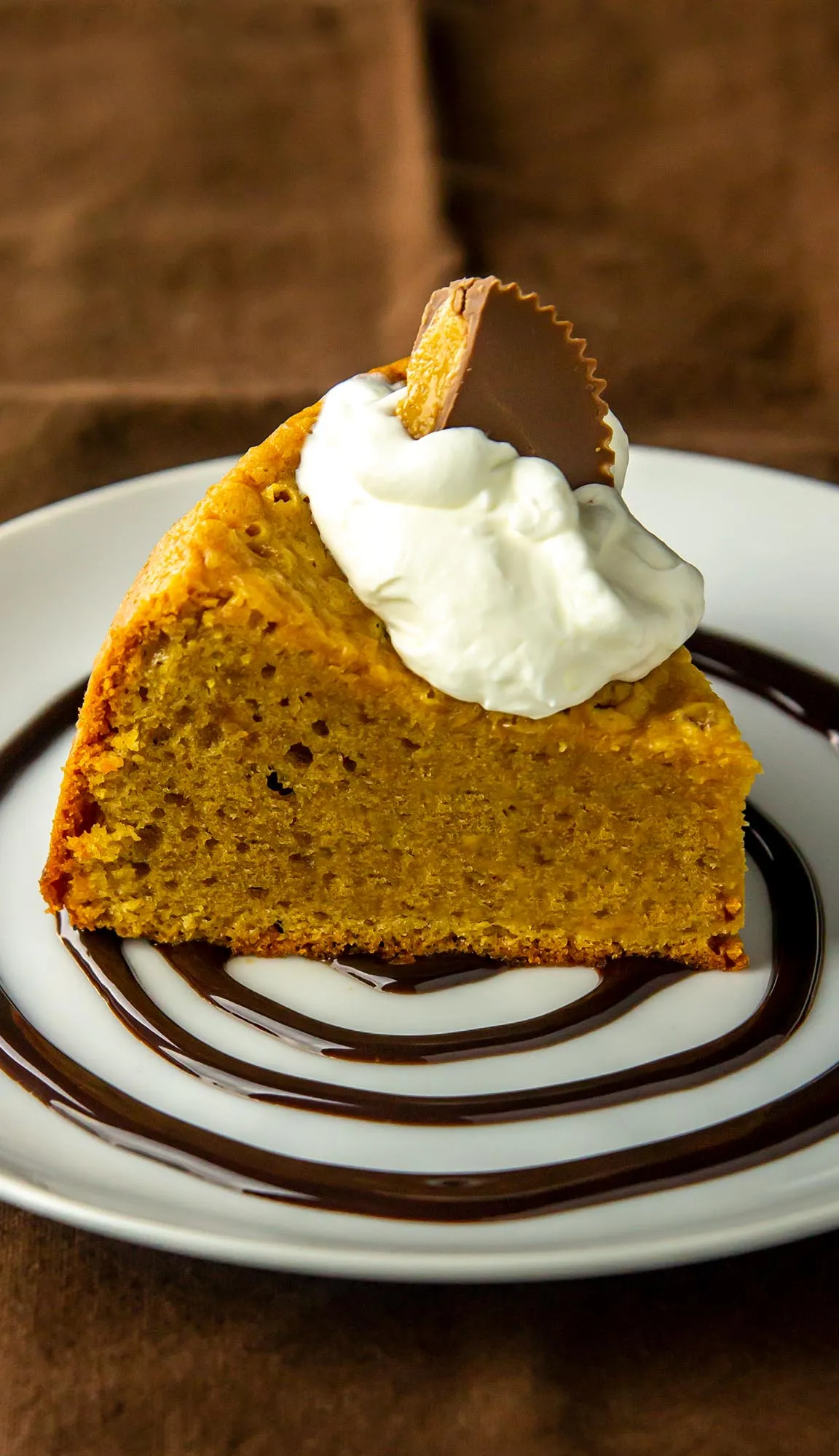
This slow cooker flourless peanut butter cake is a good example of how a few simple ingredients can turn into a dessert that feels a little unexpected. It bakes up rich and custardy in the middle, with a soft, peanut-butter-forward flavor that works especially well with a chocolate topping or a cloud of whipped cream. Because the batter is so short on ingredients, the small details matter: how the eggs are beaten, how gently the peanut butter is folded in, and how the cake cooks low and steady in the slow cooker.
Why the texture works
The eggs do most of the structural work here. Beating them until they triple in size adds air to the batter, which helps the cake hold together without flour. The sugar blends in next, adding sweetness and helping the mixture stay light. Once the peanut butter is folded in, the batter becomes thicker and more mousse-like than a standard cake batter, which is exactly what you want for this style of dessert.
Because there is no flour, the finished cake is not going to slice like a classic layer cake. Think tender, soft, and slightly dense rather than fluffy. That texture makes it a nice fit for spooned-on toppings like chocolate syrup.
What the slow cooker does here
The slow cooker gives the cake gentle, even heat, which is useful for a batter that can overcook quickly in a regular oven. The paper towel under the lid helps catch condensation so the top does not get soggy while it cooks. That small step matters more than you might think, especially with a dessert this simple.
If your slow cooker tends to run hot, start checking near the end of the cook time. You want the edges set and the center no longer looking wet. A little softness in the middle is normal, but the cake should not look sloshy when you open the lid.
How to keep the batter light
- Beat the eggs long enough to get real volume. This is not a step to rush.
- Fold in the peanut butter gently so you do not knock out all the air.
- Use creamy peanut butter for the smoothest texture. Chunky peanut butter would change the feel of the cake.
- Make sure the sugar is fully mixed in before adding the peanut butter, so the batter stays even.
If the batter looks a little streaky before it goes into the pan, keep folding patiently. The goal is a uniform color without overmixing.
Best ways to serve it
This cake is rich enough to stand on its own, but toppings give it a nice contrast. Chocolate syrup adds a sweeter, more dessert-forward finish, while whipped cream softens the peanut butter flavor and makes each bite feel lighter. A little of both is a solid choice if you want the cake to feel more polished without adding much work.
For a more snacky dessert vibe, serve it plain and warm. For a more finished dessert plate, add chocolate and whipped cream right before serving so the toppings stay fresh-looking and the cake keeps its soft texture.
Flavor variations that still make sense
- Chocolate-peanut butter version: Add chocolate syrup on top and serve with extra whipped cream.
- Salty-sweet finish: Sprinkle a tiny pinch of flaky salt over the top if you like peanut butter desserts with a sharper edge.
- Extra cozy serving style: Warm individual slices slightly before topping them.
- Simple garnish: A few chopped peanuts can add crunch if you want contrast.
Because the base recipe is so minimal, it is smart to keep variations focused on toppings rather than changing the batter too much. That way the structure stays dependable.
Common mistakes to avoid
- Underbeating the eggs: If the eggs do not gain volume, the cake can end up too dense.
- Mixing too aggressively after adding peanut butter: This can deflate the batter.
- Skipping the parchment and spray: A springform pan helps with release, but the cake still needs a well-prepped pan.
- Removing it too soon: Letting the cake sit uncovered for 30 minutes helps it firm up before you unmold it.
If you are unsure whether it is done, look for set edges and a center that no longer looks glossy and wet.
Storage and make-ahead notes
This cake is best once it has had time to cool and settle, but leftovers hold up well for a simple dessert the next day. Store slices covered in the refrigerator and add toppings just before serving so the texture stays nice. Chocolate syrup and whipped cream are better as last-minute additions than make-ahead toppings.
If you are making it for a small gathering, this is a practical dessert because it does not require a lot of pantry items or a full oven. It is a good option when you want something sweet that feels a little different without being fussy.
Final thought
This is the kind of recipe that earns a place in the saved folder: short ingredient list, low-drama method, and a dessert that feels more special than the effort suggests. If you like simple desserts with a strong peanut butter flavor, this slow cooker cake is worth making. Save it for the next time you want an easy dessert that still feels like a treat.
If you like easy slow cooker desserts, you may also enjoy Slow Cooker Chocolate Soufflé Cakes for another rich cake that turns out light and chocolatey.
If you want another peanut butter treat, try Monster Balls for a playful no-bake candy recipe with chocolate and sprinkles.


Rate and review this recipe