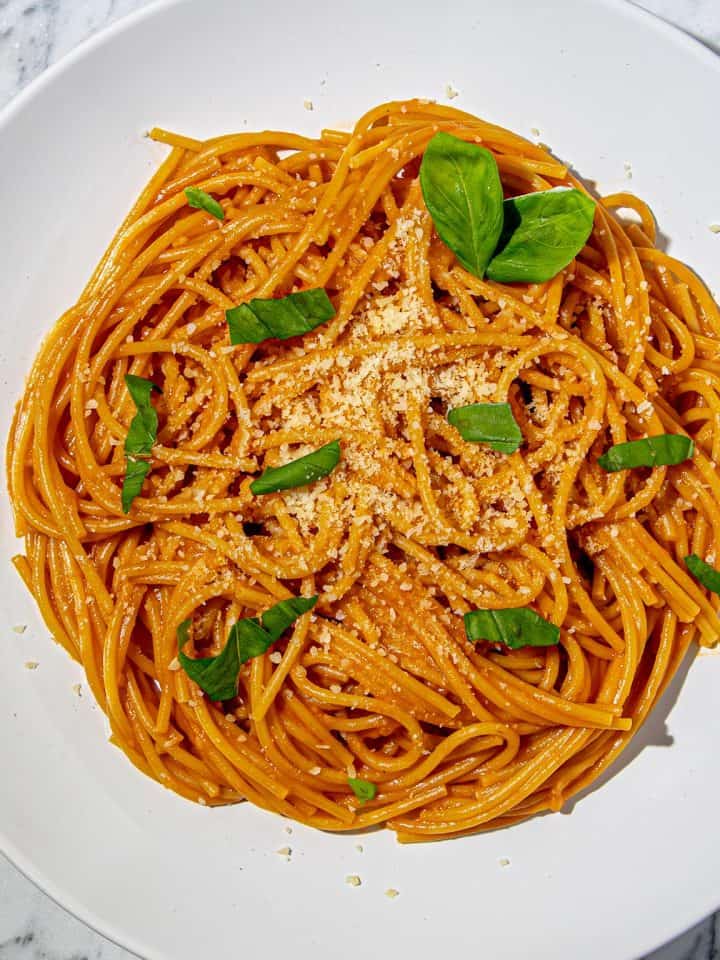
This one-pot tomato paste pasta is built for low-drama weeknights: a short ingredient list, a single pan, and a sauce that turns glossy as the spaghetti cooks right in the liquid. The key is not just convenience — it’s how the tomato paste gets a quick toast in the pan first, which deepens the flavor and gives the whole dish a richer, rounder taste.
Why this method works
Tomato paste can taste flat if it goes straight into liquid. Letting it cook for a minute or two with the garlic and oil helps it darken slightly and develop more savory flavor. After that, the broth and water create enough liquid for the pasta to soften while also concentrating into a sauce. Stirring often matters here because spaghetti likes to clump before it loosens into a silky finish.
What to expect from the texture
This is not a heavy, slow-cooked red sauce. It’s lighter, sharper, and more streamlined, with a glossy coating that clings to the noodles. The Parmesan adds body at the end, which helps the sauce feel a little more rounded without making it thick or heavy. Fresh basil adds a clean finish that keeps the dish from feeling one-note.
Small changes that make a big difference
- Stir often: One-pot pasta needs attention so the strands stay separate and cook evenly.
- Watch the liquid level: If the pan looks dry before the spaghetti is tender, add a small splash of water and keep going.
- Cook the tomato paste briefly: A quick toast in the oil gives you more flavor than simmering it only in liquid.
- Add cheese off the heat: Stirring in Parmesan after cooking helps it melt smoothly instead of clumping.
Easy ways to make it your own
This recipe is a good base if you want to build a little more flavor without turning it into a project. Try one small change at a time so the sauce still stays balanced and weeknight-friendly.
- Make it vegetarian: Swap in vegetable broth for the chicken broth.
- Add heat: A pinch of red pepper flakes with the garlic gives the sauce a little edge.
- Make it richer: Finish with a small pat of butter along with the Parmesan.
- Add a protein: Serve with cooked chicken, shrimp, or white beans if you want something more filling.
- Use another herb: If you don’t have basil, a little parsley works for freshness, though the flavor will be different.
Serving ideas that fit the pasta
This pasta works well as a simple dinner for one or two, especially when you want something cozy without making a whole production out of it. It’s also easy to pair with a side that doesn’t compete with the tomato flavor.
- A crisp green salad with a light vinaigrette
- Garlic bread or toasted bread for scooping up extra sauce
- Roasted broccoli, zucchini, or asparagus
- A simple tomato-cucumber salad for something fresh and bright
Common mistakes to avoid
- Walking away from the pan: The pasta can stick if it isn’t stirred enough.
- Adding cheese too early: Parmesan can become stringy or clumpy if it goes in while the pan is still too hot.
- Letting it dry out: One-pot pasta should finish saucy, not brittle. If the liquid disappears before the noodles are tender, add a little more water.
- Overcooking the garlic: You want it fragrant, not browned, or the flavor can turn bitter.
Storage and reheating
Leftovers keep well, though the pasta will absorb more sauce as it sits. Store any extra in an airtight container in the fridge and reheat gently with a splash of water or broth to loosen everything back up. That small addition helps bring the glossy texture back instead of leaving you with a dry tangle of noodles.
Good to know before you start
Because this recipe uses spaghetti in a single pan, a little patience goes a long way. Keep the heat at a steady simmer, stir often, and check the pasta a minute or two before the timing is up so it lands tender instead of soft. If you like recipes like this, save it for later — it’s the kind of low-fuss dinner that’s easy to come back to on a busy night.
If you want a creamier tomato option, try Palomino Sauce for a rich pasta finish.
If you prefer a gentler tomato flavor, these tips for lower-acid tomato sauce may be helpful.







Rate and review this recipe