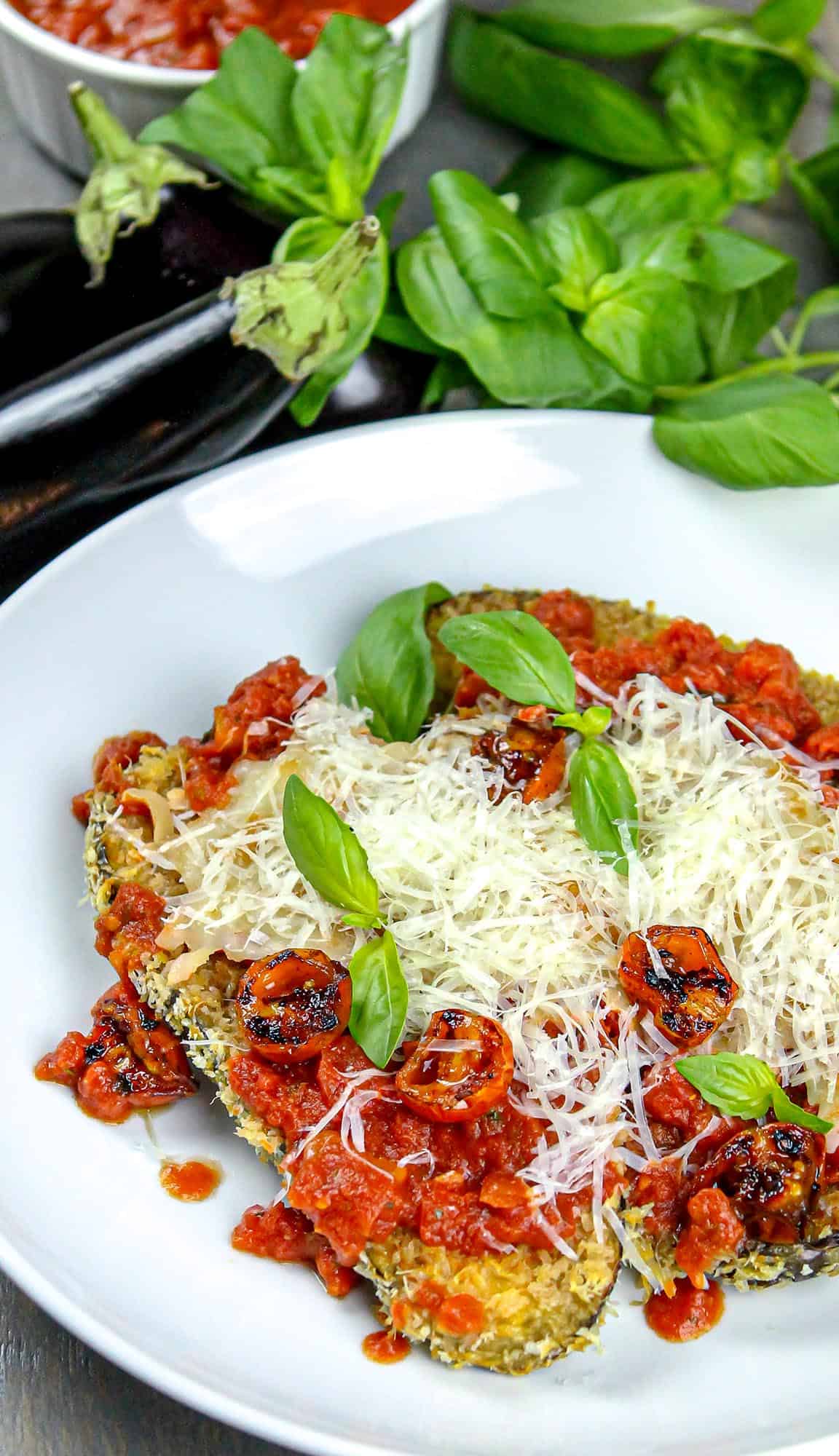
Eggplant Parmesan works best when you treat the eggplant first, then build the rest around that crispy base. The salt-and-drain step pulls out extra moisture, which helps the slices brown instead of steaming. That matters here because the whole dish depends on contrast: crisp coating, tender eggplant, saucy marinara, and melty mozzarella.
Why the breading setup matters
This recipe uses a classic three-step coating: flour, egg, then a parmesan-panko mix. The flour helps the egg cling, the egg acts like glue, and the panko gives you a lighter, crunchier crust than fine breadcrumbs. The grated parmesan in the coating adds extra savory flavor and helps the outside turn golden in the oven.
If you are tempted to skip one of those layers, the texture will change fast. Without flour, the egg slides off. Without egg, the crumbs do not stick well. Without panko, the crust is softer and less crisp. It is a simple setup, but each part has a job.
How to keep the eggplant from going soggy
The biggest thing to watch for is moisture. Eggplant holds a lot of water, so the salt-and-drain step is not just for tradition. It helps the slices brown more evenly and keeps the finished dish from feeling heavy.
- Pat the slices dry after draining so the coating sticks better.
- Use a single layer on the baking sheets so the eggplant roasts instead of steaming.
- Preheating the baking sheets helps the bottom of the coating start crisping right away.
- Do not drown the slices in sauce before baking; add the marinara after the eggplant is browned and topped with cheese.
What to expect from the texture
This version is a little lighter than a fried Eggplant Parmesan, but it still aims for a crispy outside and a soft center. The eggplant should be browned and tender, not collapsed. The mozzarella should melt into a stretchy layer, and the marinara should stay bright and saucy rather than making everything watery.
If you want a firmer finish, let the baked slices sit for a minute before assembling. That gives the crust a chance to set up a little more before it meets the sauce.
Easy ways to make it your own
This recipe is flexible enough to fit what you have on hand, as long as you keep the structure the same. A few smart swaps can change the flavor without making the process harder.
- Swap the sauce: Use a garlicky marinara, a chunky tomato sauce, or a smoother jarred sauce depending on what you like.
- Adjust the cheese: Mozzarella gives the classic melt, but a little provolone can add a sharper edge.
- Add herbs: Fresh basil at the end keeps the flavor bright. If you like a more savory finish, a little dried oregano in the breadcrumb mix also works well.
- Make it more filling: Serve it over pasta, with crusty bread, or alongside a simple green salad.
Best ways to serve it
Eggplant Parmesan is rich enough to stand on its own, but it also plays nicely with simple sides. Something fresh or lightly bitter helps balance the cheese and sauce.
- A green salad with a sharp vinaigrette
- Garlic bread or toasted Italian bread
- Spaghetti or another simple pasta
- Roasted vegetables for a bigger vegetarian dinner
If you are serving it for a smaller household, this is the kind of dish that reheats well enough to make leftovers worth planning for.
Storage and reheating tips
Leftover Eggplant Parmesan keeps best when stored in an airtight container in the fridge. Because the sauce softens the breading over time, the crust will not stay as crisp as it is right out of the oven. That is normal.
For the best texture, reheat portions in the oven or toaster oven until hot and the cheese is melted again. A microwave works in a pinch, but it will soften the coating more. If you know you want leftovers, keep the sauce and baked eggplant separate until serving whenever possible.
Common mistakes to avoid
- Not draining the eggplant long enough: Skipping this step usually leads to softer slices and less browning.
- Using too much oil on the pan: A thin, even layer is enough. Too much can make the coating greasy instead of crisp.
- Crowding the baking sheets: Give each slice space so the edges can brown.
- Adding sauce too early: The eggplant needs that first bake to get golden before the marinara goes on.
If you want more beginner-friendly dinner ideas like this, save the recipe to your BestRecipes list so it is easy to find next time. And if you like recipes that feel cozy, practical, and worth making, keep browsing for your next weeknight favorite.
If you want a lighter take on this classic, try baked eggplant Parmesan for the same layers of sauce and cheese without the extra frying.
If you like the same crispy coating and melty cheese flavors in a different format, try these Chicken Parmesan Sandwiches.
For another eggplant-forward dinner, try Pasta A La Norma.
If you like the same comforting marinara-and-cheese combination in a pasta bake, try Baked Manicotti.
If you like the same crispy coating and melty cheese flavors in a different format, try these Chicken Parmesan Sandwiches.
If you like the same comforting marinara-and-cheese combination in a baked pasta dish, try Spinach and Ricotta Stuffed Shells.





Rate and review this recipe