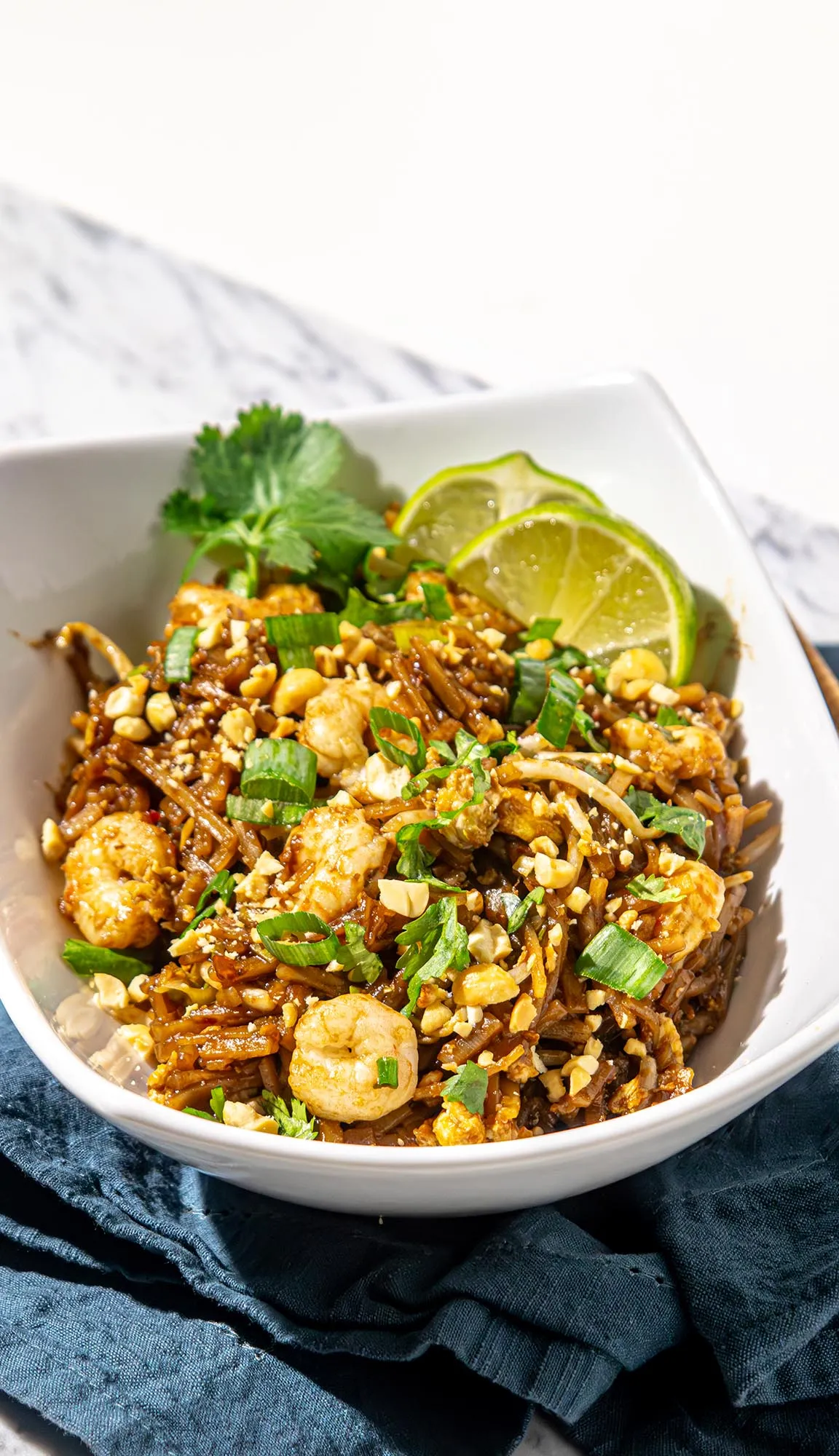
This Easy Shrimp Pad Thai keeps the big, familiar flavors of the classic dish while staying weeknight-friendly. The sauce is doing most of the heavy lifting here: tamarind brings tang, fish sauce adds savoriness, brown sugar softens everything, and a little vinegar keeps the flavor bright. Once the noodles and shrimp go in, the whole dish comes together fast, so it helps to have everything prepped before you turn on the stove.
What gives Pad Thai its signature flavor
Pad Thai works because it balances a few strong flavors instead of leaning on just one. Tamarind paste gives it that sweet-sour edge, while fish sauce and soy sauce bring salt and depth. Brown sugar rounds out the sauce so it tastes rich instead of sharp. If you like a little heat, the chili paste is optional, so you can make this as mild or as punchy as you want.
The texture that makes this dish work
You want a mix of soft noodles, tender shrimp, crisp bean sprouts, and crunchy peanuts. That contrast is what keeps each bite interesting. The shrimp should just turn pink and opaque, and the bean sprouts should stay a little crisp so the dish still feels fresh. If the noodles sit too long in the pan after the sauce is reduced, they can soften more than you want, so toss everything together and serve it while it’s still saucy.
Helpful prep tips before you start
- Mix the sauce first. Once you start cooking, things move quickly.
- Cook the noodles just until tender. They’ll keep softening when they hit the skillet.
- Separate the green onion whites and greens. The whites cook early for flavor; the greens go in at the end for freshness.
- Have the eggs beaten and ready. They scramble quickly in the hot pan.
Easy ways to make it your own
This recipe is flexible without losing the spirit of Pad Thai. You can keep the chili paste out for a gentler version, or add a little more if you want more heat. If you’re cooking for one or two, it scales down well as long as you keep the sauce balanced. You can also swap the garnish around based on what you have: cilantro adds freshness, peanuts add crunch, and lime brings the final bright finish.
What to watch for while cooking
- Don’t overcook the shrimp. They only need a few minutes per side.
- Let the sauce reduce a little, not too much. It should be slightly thickened and glossy, not sticky or dry.
- Add the noodles before the sauce gets too concentrated. That helps them coat evenly.
- Finish with lime at the table. A squeeze right before eating keeps the flavor bright.
Serving ideas
This is a complete dinner on its own, but it also works well with something light and fresh alongside it. A simple cucumber salad, quick steamed greens, or even just extra lime wedges on the side can make the meal feel more rounded without adding much work. If you’re serving it for friends, set out extra peanuts, cilantro, and chili paste so everyone can adjust their bowl.
Leftovers and reheating
Pad Thai is best right after cooking, when the noodles are still glossy and the toppings stay crisp. If you do have leftovers, store them in an airtight container in the fridge and reheat gently in a skillet or microwave with a splash of water to loosen the noodles. Add fresh lime, cilantro, or peanuts after reheating so the final bowl still tastes lively.
Final thought
If you’ve wanted a shrimp Pad Thai that feels doable at home, this is a solid place to start. It uses grocery-store ingredients, moves quickly, and gives you that sweet-sour-salty balance Pad Thai is known for. Save it for a busy night, then make it your own with more heat, more lime, or extra crunch.
If you’re in the mood for another seafood dinner, try these crisp fish and chips for a simple comfort-food option.
If you’re in the mood for another seafood dinner, try these sweet chili sauce shrimp tacos for a quick, flavorful change of pace.


Rate and review this recipe